Of Meteors and Astronauts (Part 1)
As soon as I landed in Pheonix, I was on the road for a three hour drive north to Flagstaff. My trip would bring me in contact with the Meteor Crater and the Skylab I astronaut, Paul Weitz.
I passed right through Flagstaff on the first day and headed for Meteor Crater. A crater famous for it's youth (in geological terms) and as a training ground for astronauts destined to walk on the Moon.
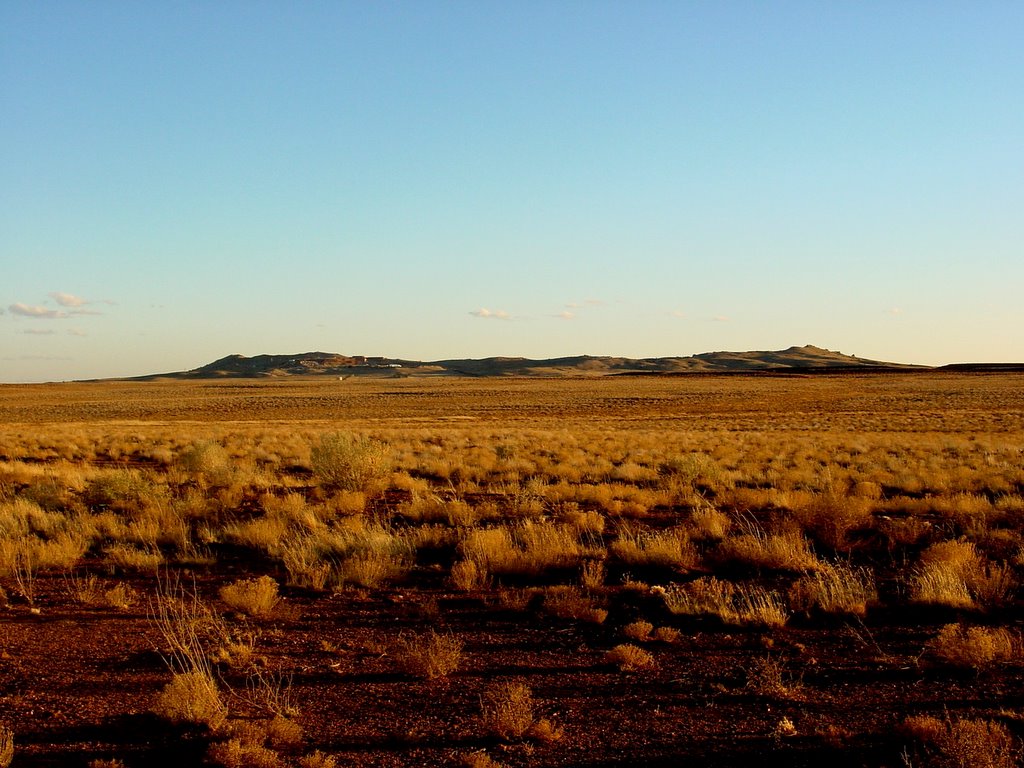 Meteor Crater is approximately 40 miles east of Flagstaff. After a traveling on a major highway, there is a turn off onto a narrow road that takes you the final 6 miles to the crater. The crater rim materializes as a row of hills rising up over 150 feet above the floor of the upper plateau of Arizona. There are no visual cues to provide scale within several miles of the crater itself, which gave me a real life lesson in estimating distances.
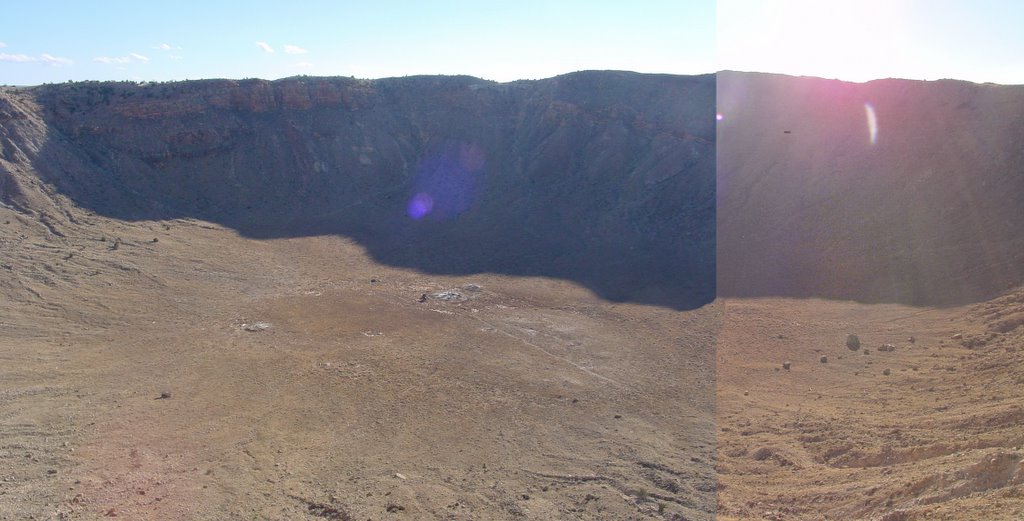
The above panoramic photograph shows the far southern face of the crater and attempts to provide an idea of the bowl created by the initial impact of the meteorite. 50,000 years ago, a iron meteorite weighing 300,000 tons struck the high plateau at a speed reaching an estimated 40,000 miles per hour. The impact is compared to the explosion of 20 million tons of TNT and moved an estimated 150 million tons of sandstone.
The far side of the crater is approximately 4,000 feet away for the vantage point of the camera. The bowl is over 500 feet deep. While I was standing on the rim, I called my wife (I could get cell phone service on the rim of a crater in the middle of nowhere and I cannot get cell phone coverage in my home). During our conversation, I was describing the crater to her and estimated the measurements at almost 900 feet in diameter and 150 to 200 feet deep. After talking with her, I went into the museum and found out what the real distances were of the crater. I came to a better understanding of what problems the moonwalkers must have had estimating distance and size of rocks and craters during their navigation on the lunar surface.
 Towards the end of the day the sun highlighted portions of the eastern wall of the crater. A sheer cliff can be seen approximately one third of the way down the crater wall. That appears to be the ground level of the plateau where the impact occurred. The meteorite threw up an overlapping rim of rock that towers above the plain. To get a sense of scale, if you follow the ridge of the crater from the left of the photograph, there is a rock standing on the top of the rim. That tiny speck is called House Rock, because it's size is representative of the average home.
The lower portion of the wall is a gentler slope (still very steep) of debris and talis that have eroded toward the bottom of the crater. There are gullies in several places caused by erosion.
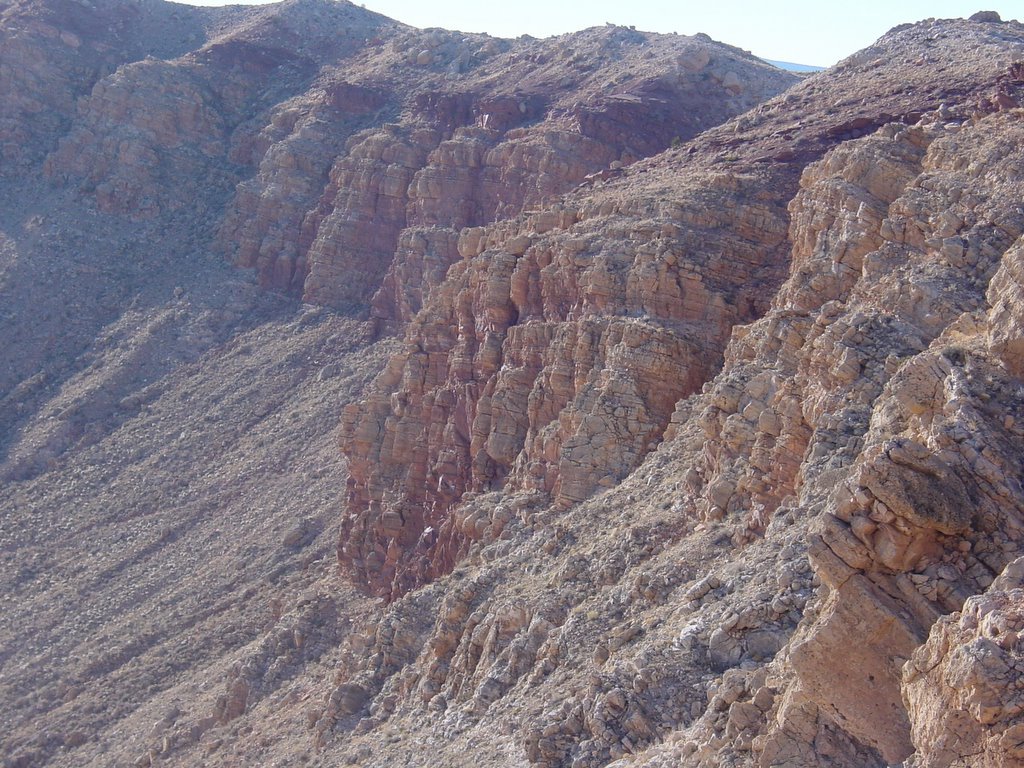 In this close up of the northwestern side on the crater wall the shocked and uplifted sedimentary layers are shown in greater detail. Beyond that point, the earth was ejected by the impact of the 300,000 ton meteorite forming the rim and blanketing the plains beyond. The sedimentary layers, so prevalent in this photo, were caused by the sinking of sediment to the bottom of what was once a large inland sea. There are still marine fossils found at the site in the layers. Another interesting item that you can find on the rim is sandstone that was so shocked by the impact that it was turned into a fine powder that feels and looks very much like talcum powder.
I did have to play tourist while there. I know the museum staff knew they had a "mark" when they saw me coming through the door. I found out that the museum does not sell remnants of the actual meteorite. The curatorial staff values that actual nickel-iron fragments at $2,000 dollars per pound, so I was really glad I bought my 2 pound fragment awhile ago. Still, the museum sells iron oxide fragments and I left the crater carrying a few extra pounds of rocks more than when I arrived. I spent most of the afternoon at the crater just marveling at it's size and didn't leave until the sun was setting and the shadows had filled the bowl. Meteor Crater is definitely a place to visit if you are a space enthusiast.
posted by Larry McGlynn at
10:35 PM